
Permaculture Design Services
Award-winning permaculture design for homeowners who want a landscape that works as hard as they do.
Custom master plans combining landscape architecture with permaculture — since 2004.
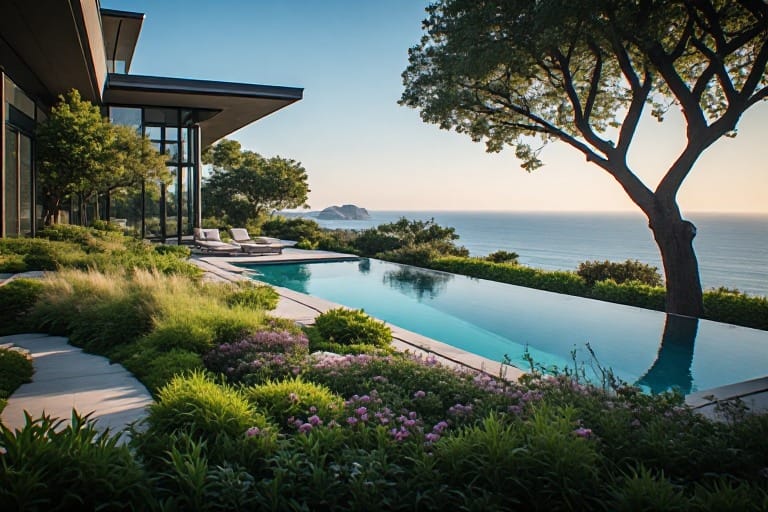
What Is Permaculture Design?
A permaculture design is a professionally drawn plan that reorganizes your property so its elements support each other — reducing your water bill, cutting maintenance to a fraction of what it is now, and producing food, beauty, and habitat simultaneously.
I'm Jadene Mayla, and I've been creating these plans for homeowners since 2004, combining a graduate degree in landscape architecture with a Permaculture Design certificate from the Cascadia Permaculture Institute.

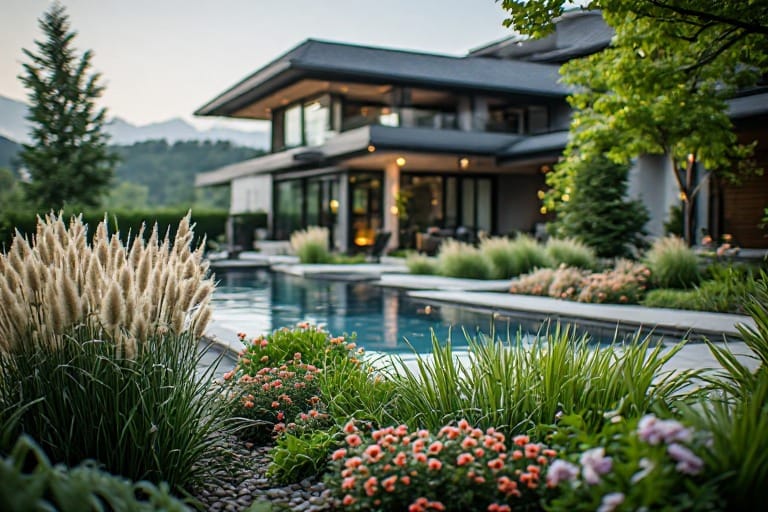
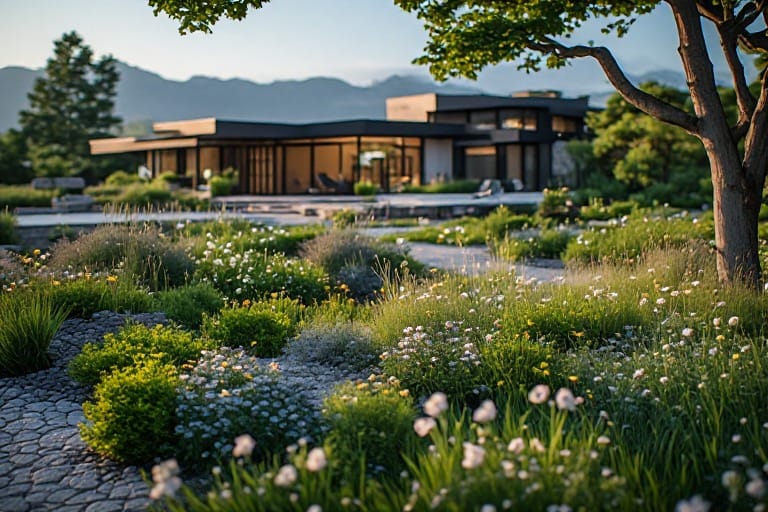
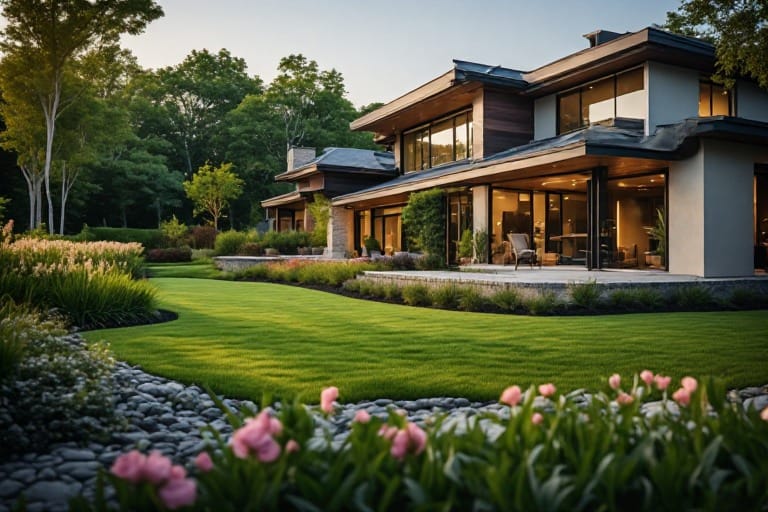
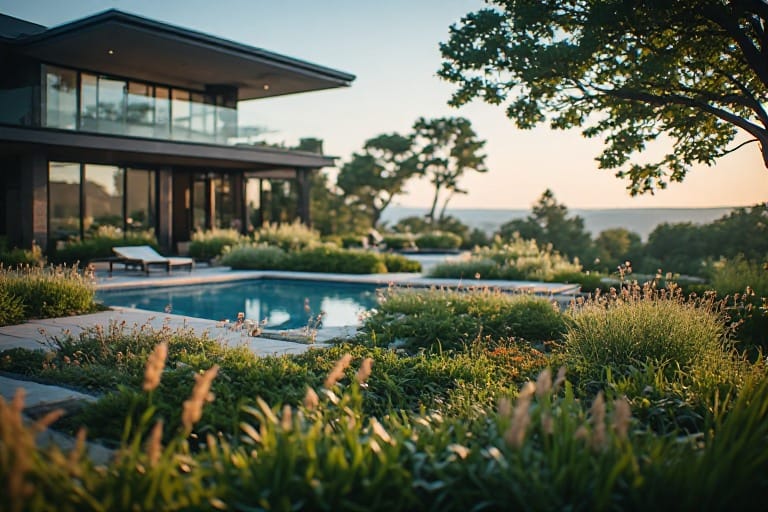
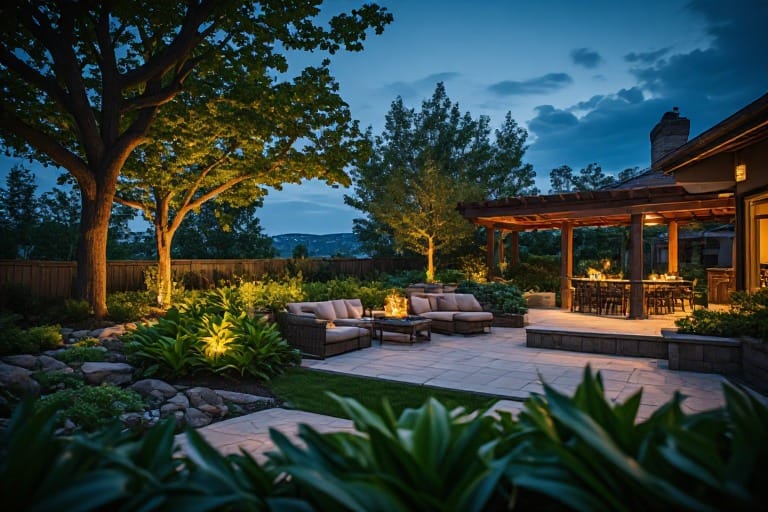
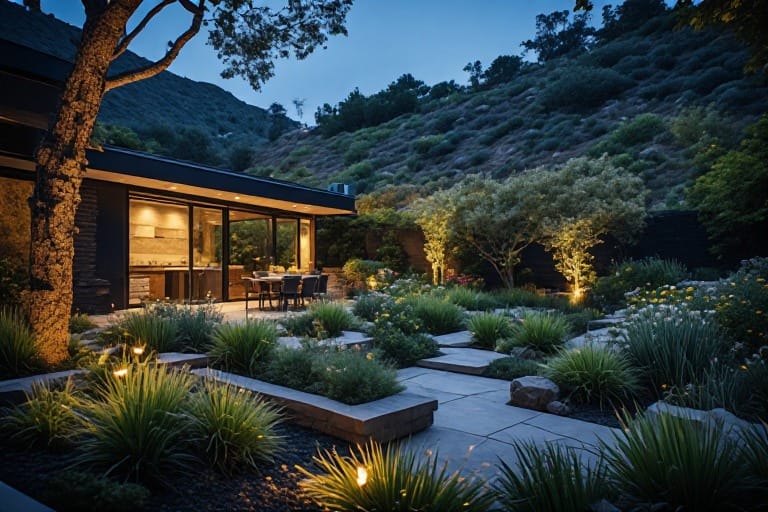
How Does Permaculture Design Differ from a Typical Landscape Plan?
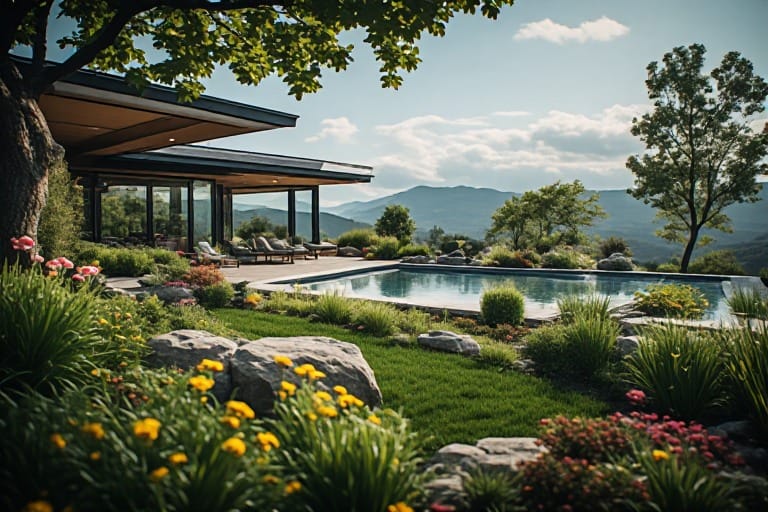
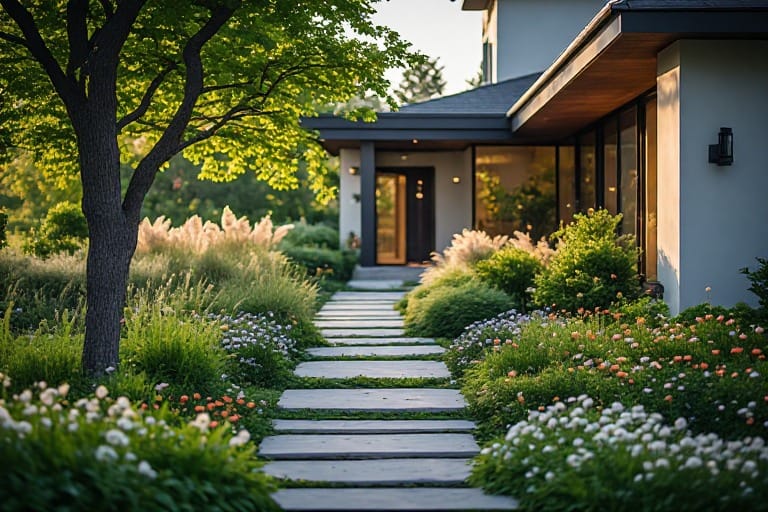
Permaculture design is a planning method that uses ecological relationships as its foundation. Instead of treating your yard as a collection of individual plantings and hardscape features like in traditional or conventional design, permaculture allows a designer to integrate all aspects of a property's ecology so that the whole system can maintain itself over time with minimal input.
A traditional landscape plan tells you what to put where. A permaculture design tells you why it works there, how the pieces interact, and what happens next as the system matures.
The practical result: a landscape that gets easier to manage every year, not harder.
What's Included in a Permaculture Design Plan?
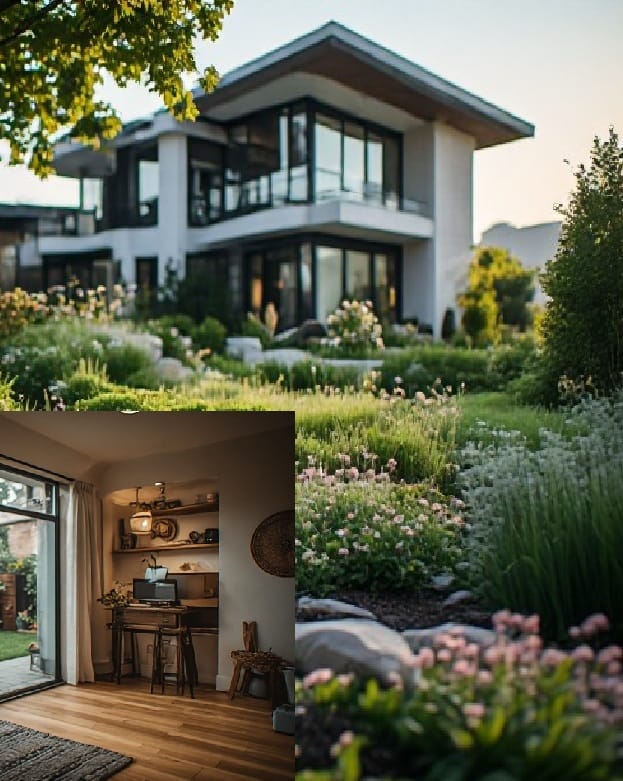
Every plan I create is a CAD-drawn master document specific to your property. Here's what you receive:
Comprehensive site analysis — soil, sun patterns, water flow, wind, microclimates, and existing vegetation mapped and documented
CAD-designed master plan — a scaled, build-ready drawing of your entire property with every element placed and labeled
Strategic plant selection — species chosen for compatibility with your climate, soil, and goals (not just what's in a catalog), with guilds, layers, and long-term growth accounted for
Detailed plant lists — every species with placement, quantity, function, and spacing
System design — water management (swales, infiltration basins, greywater routing), hardscape integration, and phased installation strategy
Implementation guidance — a clear roadmap so you know exactly how to bring the plan to life, whether you're DIY or hiring a contractor (or me) for installation
Phased timeline — sequenced to match your budget, time, and energy without compromising the final outcome
Who Permaculture Design Is For
This is not a one-size-fits-all service. I work with homeowners and landowners who:
Want to lower ongoing costs — water, electricity, maintenance, waste, and food — without sacrificing beauty
Are tired of a yard that demands more attention than it gives back
Want to grow more of what they eat on their property
Are replacing a lawn or starting from bare ground and want to do it right the first time
Are building or renovating and want the landscape planned before expensive decisions are locked in
Have a property they want to increase in value through a distinctive, functional outdoor environment
Want a landscape that fits their neighborhood or HOA while still being ecologically meaningful
Projects range from a suburban side yard in Los Angeles to a 55-acre property in Oregon. If you have land and a goal, I can plan for it.
Why the Landscape Architecture + Permaculture Combination Matters
Most permaculture designers are farmers, ecologists, or self-taught practitioners. Most landscape architects have never studied permaculture. I hold both credentials — a graduate degree in Landscape Architecture from the University of Oregon and a Permaculture Design certificate from the Cascadia Permaculture Institute, where my final project won a national first-place design competition award.
That combination means your plan is:
Buildable — drawn to professional landscape architectural standards, with proper grading, drainage, and construction considerations
Ecologically sound — grounded in permaculture principles that create self-maintaining systems
Aesthetically refined — designed to look intentional and beautiful, not like an experiment
Context-aware — positioned to work with your home's architecture, your neighborhood, and your HOA if applicable
This is the specific combination clients have sought out since 2004.
What Clients Actually Get
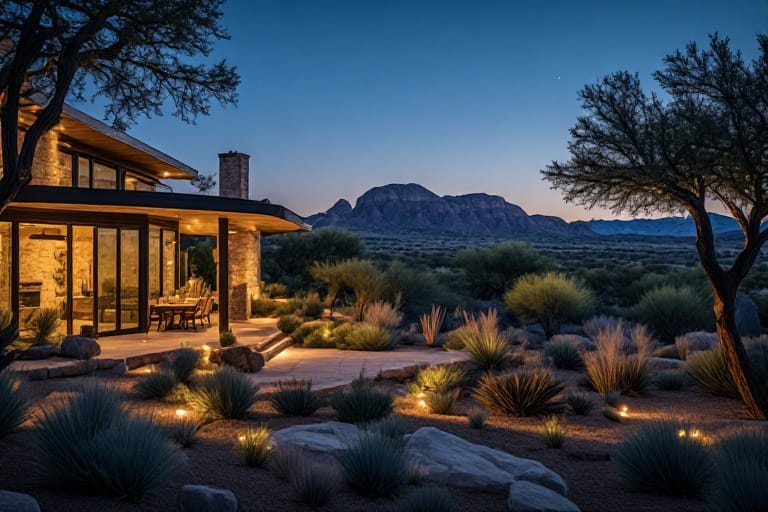
Rural Acreage — Alpine, TX
Food forest, entertaining spaces, home office, swimming pond, ADU integration, stormwater infiltration.
Urban Lot — Beverly Hills, CA
Erosion control, permeable hardscape, outdoor kitchen, perennial pollinator and edible gardens, spa, ecological lawn, privacy screening, retaining walls.
Urban Lot — Los Angeles, CA
Low-maintenance landscaping, soil restoration, perennial pollinator habitat, permeable walkways and patio, arbor and deck, mood lighting.
50-Acre Property — Oregon City, OR
Biochar production forest, orchards, multi-pond restoration, riparian restoration, guest camping, outdoor classroom, forest restoration.
Suburban Development — Eugene, OR
Community-wide ecological redesign including path systems, community gardens, ecological parking, wetland restoration, and boardwalk.
How the Process Works
1. Free Strategy Session
A 15-minute call where I learn about your property, your goals, and your constraints. You leave with a clear direction regardless of whether we work together.
2. Site Analysis
I assess your property's unique characteristics — soil quality, sunlight exposure, water flow, existing vegetation, topography — to inform every design decision. For remote projects, this is done through guided documentation, photos, and a detailed questionnaire. For local projects, I walk the site.
3. Design & Drafting
I create your CAD master plan, plant selection, and phased implementation strategy. You review and provide feedback. I refine until it's right.
4. Delivery & Implementation Support
You receive your complete plan with everything you need to bring it to life — whether that's hiring a contractor, doing it yourself over time, or having me manage the project. I'm available for questions as you implement.
Permaculture Design for Your Climate
I serve clients in all 50 states. Your plan is built around your specific climate zone, soil conditions, and water availability — not a generic template.
Semi-arid regions (Los Angeles, Phoenix, Austin, Las Vegas): Water infiltration strategies, drought-adapted plant palettes, shade creation, and soil building that can reduce irrigation needs by 90% once established.
Temperate regions (Portland, Pacific Northwest, Northeast): Layered food forests, perennial polycultures, rainwater harvesting, and native habitat integration that work with abundant rainfall.
Humid subtropical (Houston, Atlanta, Southeast): Drainage management, heat-tolerant species selection, and soil strategies for heavy clay or sandy soils.
Cold-climate regions (Upper Midwest, Mountain West): Short-season planning, hardy species selection, and microclimate creation to extend your growing window.
Frequently Asked Questions (FAQ)
How much does a permaculture design plan cost?
Pricing depends on property size and complexity. Urban lots are in one range; acreage and multi-acre properties are in another. [→ View packages and pricing]
Do I need to be in your local area?
No. I serve all 50 states with a trusted bespoke process. Remote projects use a detailed documentation process (photos, measurements, soil reports, satellite imagery) to achieve the same design quality as an in-person site visit.
Can I implement the plan myself?
Absolutely. Many clients do. The plan is designed to be actionable by a homeowner with basic landscaping skills. I also provide implementation guidance and a phased timeline so you're not overwhelmed.
Will this work with my HOA?
Yes. I design to your neighborhood's aesthetic expectations. A permaculture design doesn't have to look like a "farm" — it can look like a refined, intentional landscape that happens to function ecologically.
How long does the design process take?
Typically 6–10 weeks from start to final delivery, depending on property size and your responsiveness during the review phase.
What's the difference between a permaculture design and a landscape design?
A landscape design focuses on aesthetics and function. A permaculture design adds ecological systems thinking — how elements interact, how the landscape maintains itself, and how it becomes more productive over time. My plans do both.
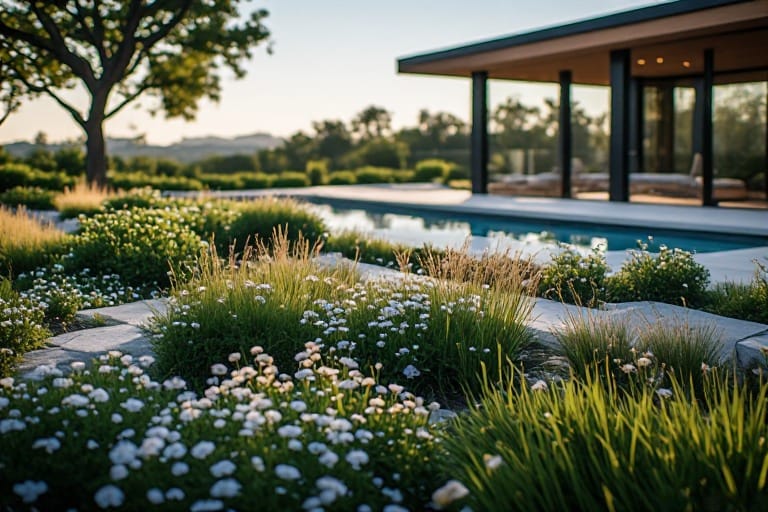
Turn your tired yard into the outdoor space you've always wanted — most projects are done in under three months. → See before-and-after photos from neighbors like you.
Homeowners trust Eco-Logic with hundreds of yard transformations — and client satisfaction is my priority on every job. → Get your free, no-pressure estimate today.
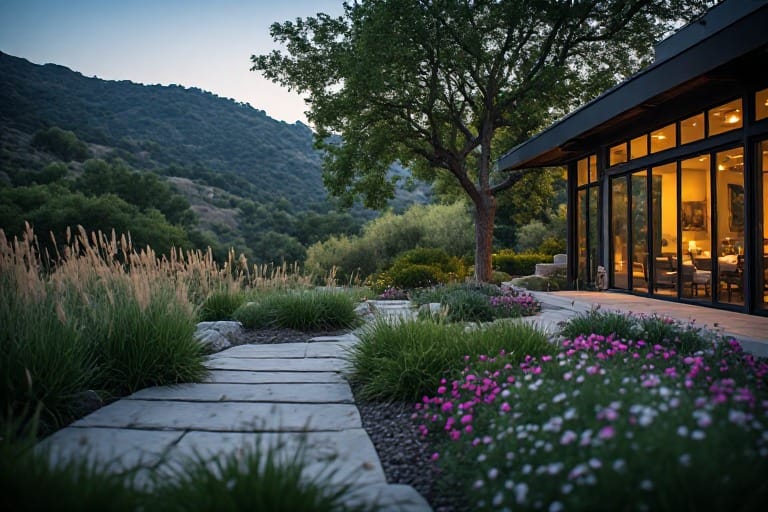
START WITH A FREE PERMACULTURE STRATEGY
Start With a Free Permaculture Strategy
No obligation. No sales pitch. A 15-minute conversation where I'll help you identify the highest-impact changes for your property
and give you a clear next step — whether that's working with me on a full plan or tackling a specific area yourself.
Eco-Logic
Permaculture &
Landscape Design
ECO-LOGIC PERMACULTURE & LANDSCAPE DESIGN
SERVING ALL 50 STATES SINCE 2004
Based in the Texas Hill Country. In-person service for the greater Austin-San Antonio area; bespoke remote process for all other regions.
(512) 400-0150

© 2026 Eco-Logic Permaculture & Landscape Design, All Rights Reserved.
Create Your Free Account