
Contemporary Landscape Design: 4 Case Studies in Regenerative Transformation
Contemporary Landscape Design: 4 Real-World Regenerative Transformations
What is contemporary landscape design—really?
At its best, it’s more than clean lines and modern aesthetics. Through a regenerative lens, contemporary landscape design becomes the integration of beauty, function, and ecology—spaces that not only look refined but actively improve the land over time.
Instead of high-maintenance, resource-intensive landscapes, this approach creates systems that are productive, resilient, and aligned with natural processes.
The result: landscapes that give back more than they take.
The following four case studies show what this looks like in practice—real properties transformed through thoughtful, regenerative design.
Case Study 1: Contemporary Landscape Design Applied to a Desert Restoration Project
The Challenge
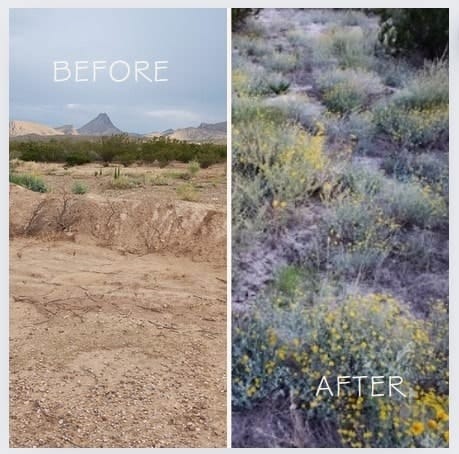
This site began as a severely degraded landscape—compacted bentonite soil, widespread erosion, and barren ground with little to no viable plant life. Dead and struggling trees dotted the property, with no supporting layers of perennials or groundcovers to stabilize or enrich the system.
The environment was harsh and unforgiving: hot, reflective, and biologically inactive, with no pollinator presence and no ecological function.
My Custom Design Solution
The strategy focused on restoring natural function from the ground up—starting with soil, water, and plant succession.
Broke up compaction and initiated soil regeneration processes
Designed the landscape to slow, spread, and sink water naturally
Set up natural systems to establish a full spectrum of native plant layers (grasses, forbs, shrubs, and perennials) with zero material, water, or labor cost
Built organic matter over time to create a self-mulching system
Selected species adapted to the climate to ensure long-term survival and resilience
The Transformation
Soil transitioned from compacted and lifeless to porous and biologically active
A naturally accumulated organic mulch layer now protects and feeds the soil
Erosion was completely replaced with native vegetation and water utilization
Full plant coverage established across the site with native species
Noticeable cooling effect due to increased plant density and ground cover
Pollinator life returned—dragonflies, bees, hoverflies, and butterflies now abundant
Dozens of trees established with zero irrigation, amendments, or maintenance
Contemporary Landscape Design Case Study 2: Urban Backyard Design + Build
The Challenge
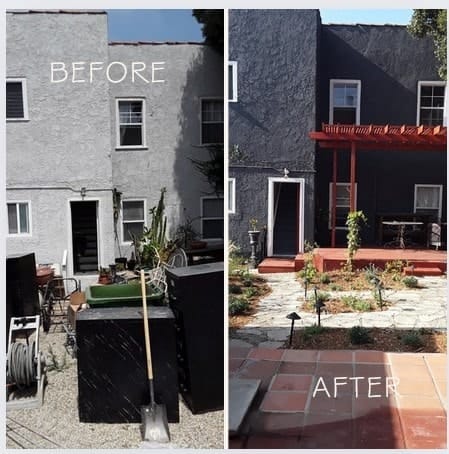
This backyard was a hot, exposed, and underutilized space dominated by pea gravel. There was no organization, no functional layout, and no designated areas for storage, gathering, or relaxation.
With minimal plant coverage and no shade, the space felt uncomfortable and unusable for most of the day.
My Custom Contemporary Landscape Design Solution
I transformed the space into a functional outdoor living environment—balancing comfort, beauty, and ecological performance.
Installed permeable pathways to recharge groundwater
Designed native, pollinator-friendly perennial planting beds
Built a redwood deck with a pergola to create shaded dining space
Integrated flowering vines and aromatic plants for sensory experience
Added landscape lighting for ambiance and nighttime security
Installed wall fountains to reduce traffic noise and introduce calming sound
Regraded the site to direct stormwater into planting areas
The Transformation
A defined, organized space with clear zones for living, storage, and movement
Cooler, shaded microclimate that makes the yard usable throughout the day
Increased biodiversity with pollinator-friendly plantings
Reduced water use through passive hydration of planting beds
A sensory-rich environment with scent, sound, and visual appeal
A backyard that functions as an extension of the home
Case Study 3: Urban Frontyard Design + Build (Privacy & Function Upgrade)
The Challenge
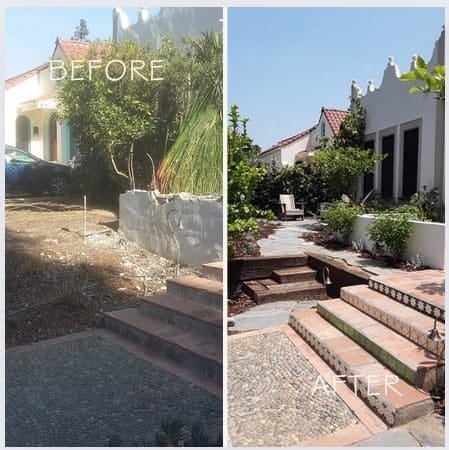
This front yard lacked privacy, structure, and usability. Overgrown plants created a neglected appearance, while barren dirt and unsafe footing made the space both unattractive and impractical.
An existing pond sat unused, and the overall layout failed to support either aesthetics or function.
My Custom Contemporary Landscape Design Solution
I restructured the entire front yard to create a safe, private, and inviting outdoor space.
Installed permeable paths to improve drainage and groundwater recharge
Designed native, pollinator-friendly perennial beds
Incorporated flowering vines and fragrant plants for sensory appeal
Built reclaimed wood retaining walls and steps for safe navigation
Added landscape lighting for both atmosphere and security
Constructed a contemporary stucco fence and ironwork gate to establish privacy
Created a dedicated sitting area integrated into the planting design
Used plantings to screen pedestrian traffic without making the space feel walled off
The Transformation
A private, secure front yard buffered from the street
Safe, functional pathways and access throughout the space
A welcoming outdoor living area integrated into the landscape
Increased plant diversity and seasonal visual interest
A balanced design that feels both structured and natural
A contemporary landscape that invites use rather than being overlooked
Case Study 4: Urban Frontyard Design + Build (Complete Regeneration)
The Challenge
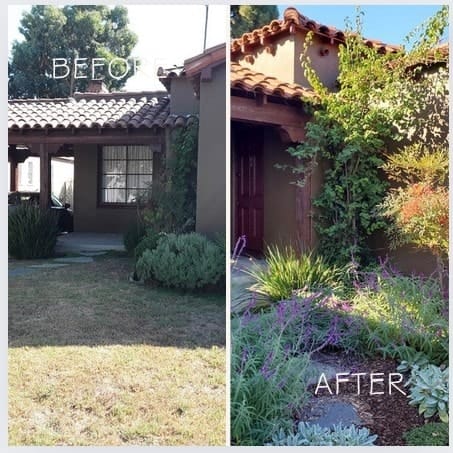
This property was struggling on multiple levels. The lawn was dead, plants were failing, and the soil was dry and depleted.
High-maintenance exotic species required constant input while delivering poor results. The yard had become a neighborhood eyesore—neighbors even described it as the worst on the block.
Meanwhile, the home itself suffered from high cooling costs due to lack of shade and poor landscape integration.
My Custom Design Solution
I approached this contemporary landscape design challenge as a full-system regeneration—focusing on soil health, water management, and appropriate plant selection.
Regraded the landscape to capture and infiltrate storm water
Set up natural systems that rebuilt soil biology to support long-term plant health
Installed native, pollinator-friendly perennial guilds
Replaced failing plants with climate-adapted species
Designed the layout to integrate the home into the surrounding landscape
Focused on reducing maintenance while increasing performance
The Transformation
From “worst yard on the block” to “prettiest yard on the block” - according to neighbors
Soil regenerated with active microbial life and improved structure
Strong plant growth, including increased tree growth rates
Abundant flowering from native perennials, shrubs, trees, and ground cover plants
Reduced cooling costs due to improved shading and microclimate
A cohesive landscape that enhances both the home and the neighborhood
Created a 'demonstration site' enabling homeowners to share permaculture
The Bigger Picture: What These Transformations Reveal
Across all four projects, the pattern is clear:
Contemporary landscape design—when approached through a regenerative lens—is not just about how a space looks. It’s about how it functions, evolves, and supports life over time.
Each of these landscapes began with a different challenge. But the outcome is the same:
More beauty
More function
More resilience
And far less waste, less maintenance, less water use, a lower power bill, and less guesswork.
This is what becomes possible when design is approached as a system—not a surface.
Ready to Transform Your Landscape?
Ready to see what’s possible for your property?
Whether you want a fully customized, done-for-you design or you’re just getting started, the next step is simple:
→ Explore what fits your goals below
Button: View Design Packages →
Subtext: See options, pricing, and what’s included
Button: Download a Free Guide →
Subtext: Start learning the foundations today
Frequently Asked Questions About Contemporary Landscape Design
What is contemporary landscape design?
Contemporary landscape design is a modern approach that prioritizes clean aesthetics, functional outdoor spaces, and sustainable systems. When combined with regenerative principles, it focuses on creating landscapes that are not only visually appealing, but also improve soil health, support biodiversity, and become more resilient over time.
How is contemporary landscape design different from traditional landscaping?
Traditional landscaping often focuses on appearance first—lawns, ornamental plants, and high-maintenance layouts. Contemporary regenerative design prioritizes function first, using natural systems, water management, and plant communities to create landscapes that are lower maintenance, more productive, and environmentally beneficial.
What is a regenerative landscape?
A regenerative landscape is designed to restore and improve ecological function over time. This includes building healthy soil, increasing water retention, supporting pollinators and wildlife, and creating systems that become more self-sustaining rather than requiring constant inputs.
Can contemporary landscape design be low maintenance?
Yes—when designed properly, it significantly reduces maintenance over time. By using climate-appropriate plants, improving soil health, and designing for natural water flow, regenerative landscapes require less watering, fewer inputs, and less ongoing labor than conventional landscapes.
Is this approach suitable for urban properties?
Absolutely. Contemporary regenerative design works in both small urban spaces and larger properties. As shown in the case studies above, even compact front yards and backyards can be transformed into functional, productive, and visually refined landscapes.
Does regenerative landscape design increase property value?
In many cases, yes. A well-designed landscape improves curb appeal, reduces long-term maintenance costs, and creates usable outdoor living space—all of which contribute to perceived and real property value.
How much does a custom landscape design cost?
Custom landscape design pricing varies depending on the size and complexity of the property. Professional design services typically start at a few thousand dollars and scale based on project scope, level of detail, and implementation planning.
How long does it take to see results from a regenerative landscape?
Some improvements—like better water infiltration and usability—are immediate. Others, such as soil health and plant maturity, develop over months and years. The key advantage is that the system improves over time rather than degrading.
Do I need to install everything at once?
No. Most regenerative landscapes are designed in phases. This allows you to implement the project over time based on your budget, schedule, and priorities, while still following a cohesive long-term plan.
What’s the first step to starting a landscape transformation?
The first step is gaining clarity—understanding your site conditions, goals, and constraints. This can come from a professional design service, a structured course, or a focused workshop that helps you avoid costly mistakes and move forward with confidence.
How do I get started with a custom design?
The easiest way to begin is by exploring design packages or booking a strategy session to discuss your property, goals, and options. From there, you can determine the best path forward based on your timeline and budget.

HEY, I’M JADENE…
How do you handle a mole invasion of your front yard? What can you grow in Southern California? In North Carolina? In Texas?
I write about these topics and more, from plants, pollinating insects and birds, beneficial wildlife, soil, water, food, neighbors, and how to make money from your property.
In this blog I hope to provide you with valuable free articles to help you solve the problems in your landscape and take advantage of the opportunities it presents.
To see posts about topics that interest you, send me a request.


JOIN MY MAILING LIST
© 2004-2025 Jadene Mayla, All Rights Reserved.